We’re at the end, class!
I’m not dying, or anything. But I promised myself at the beginning of this that I wouldn’t push this blog too far. I wouldn’t let it be one of those blogs that posted a lot at once, tapered off into a few posts a year, and died out from age or boredom. (If anyone thinks to look back at the posting dates of each one of my posts, you’ll notice a remarkable consistency.)
Which means there’s a finale to this saga. I read and reviewed the 50 Books to Read Before You Die, according to a bookmark. Just a few final remarks, and that’s all, folks.
I liked most of them. I loved many of them. There were a few I couldn’t stand, and I’m getting rid of those (to leave room on my bookshelf for better books). They all left an impression . . . they all gave me something to think about, something to chew on. Reading each one gave me a world to explore or a new perspective to consider. That’s what books are for.
Several of them gave me clues about how to be a better writer. This list is full to the brim of storytelling techniques, fascinating characters, and hilarious puns. I think all the great storytellers and artists copy from the greats, and this list featured some of the greatest stories of all time—so I’ve got a storytelling repertoire that will continue to inspire before I expire.
I keep coming back to why I chose to do this, and there’s one very obvious answer. I’d just graduated college. I loved college, and more importantly, I loved going to class. I love reading books and then talking about them. We just read this amazing chapter in this book I love, I can’t miss class! The professor’s going to break it apart, show me the little pieces that I missed—then I’ll love it even more!! That’s me. So what’s a man to do after graduation, when there are no more classes, no more professors, no more books and discussions? He starts a blog, of course.
I did this because I’d done nothing but read the assigned reading for the past four years. I wanted to dare myself into reading “literature” on my own. This was my way of making a real life class for myself, a series of self-assigned readings that any professor of a grade-A-geek would be proud of. And I did it for myself—not to show off my limited knowledge to people that know me, but to make myself better as a reader, writer, and storyteller, through the magic of the internet.
But I don’t stoop to think that this almost-three-year task made me a better person. I didn’t expect it would, because a better reader/writer/storyteller is not a better person. (If that sounds like too obvious a statement, I can assure you, that’s something I had to learn, and it’s something several fully grown adults still don’t know.)
It’s like the difference between living and reading about living. Some writers will tell you that the story is all that matters, but that only applies to stories, not to life. Stories serve many purposes—relief, connection, understanding, entertainment, discovery, motivation—but the one thing a story can’t do is replace living. Stories are reflections of life, and so is everything from history to art, from the greatest movie ever to a good joke. The reflections take us where we cannot go, far and wide around the Earth, back in time and forward to the future, and life still waits for us when we return.
No, this didn’t make me a better person. I learned a lot, though. If I use all I learned to not only tell better stories, but live a better life, then I’ll become a better person, I hope. That’s why the blogging is done, at least for now—I’m done with this chapter of my life-book, and if I stick around for too long, I might not get to the rest.
So keep reading. Then go live with what you learned.
Prof. Jeffrey
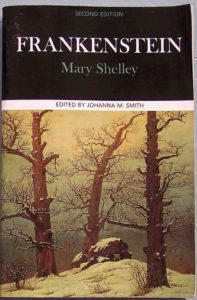 The blueprint of the story is well-known, even though the details have been undone and remade over two centuries of reinvention. An ordinary man, Victor Frankenstein, sets himself to the extraordinary task of creating life, and in a way, conquering death. He becomes a now-stereotypical mad scientist, unrivaled in determination and unthinking of consequences; and his creation is much more monstrous than he anticipated. The monster, sympathetic as he is, rampages through Frankenstein’s life until a devastating climax, and we readers are meant to learn our lesson: mindless ambition, even for the right reasons, can cause serious harm.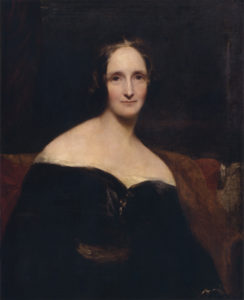
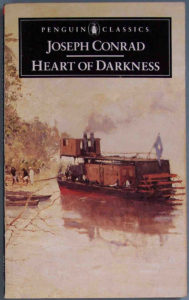 Heart of Darkness is controversial. It is a novella about Africa, written from the perspective of a European. It’s a story about the “lesser people” of Africa, the “civilized countries” attempting to conquer it, and the darkness men can succumb to in the attempt.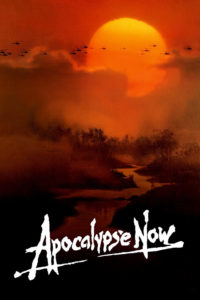
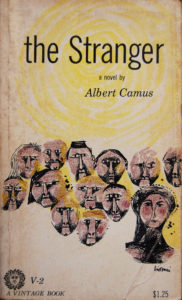 Meursault has a philosophy of life that answers every problem that approaches him: nothing matters. His mother dies in the opening line of the novel—and nothing matters. His employer doesn’t see him as ambitious enough and dares him to care more about his job—but nothing matters. He is arrested for murder that he feels isn’t his fault—still, nothing matters. It’s more of a philosophy than a story; but then the philosophy and the story collide, and things get interesting. What about love? Romantic love, family, friendship? Does that matter? What about religion, afterlife, the soul—do those things matter? Does one’s own life matter? Meursault faces those questions with his philosophy like a knight faces a dragon with a sword—the drama of such a mundane, detached story comes in when his lifestyle of detachment is threatened by things that require passion, care, commitment . . . and whether or not Meursault upholds his beliefs is what makes him a philosophical hero.
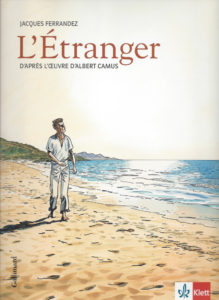 I have some personal bias here—like with other books on the 50-books list that handle belief systems, the philosophy of this story conflicts with mine and makes it difficult for me to connect with it. It’s hard enough anyway to connect with The Stranger—it disregards and abandons connection. The belief that nothing matters is found not only in what’s being said, but also in how it’s being said. It’s a story that feels emotionless, and it means to strip away not only the things we’re supposed to care about, but also the act of caring at all. Long story short, it’s difficult to appreciate this story while reading it.
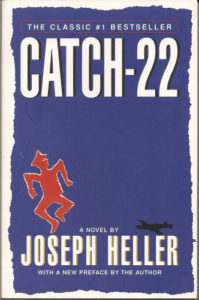 There almost isn’t a main character, but the one we focus on most is Yossarian, a fighter pilot who’s true enemy seems to be the war itself. He finds creative ways of avoiding combat—most often, he’s in the hospital for an illness that he intentionally aggravates and pretends to continue suffering from. But his officers keep raising the number of missions pilots are required to fly, and his ticket home becomes more and more out of reach. Instead of having a kind of character arc, where he finds a way to accept the war or escape it, he ends up continually fighting against the war, battle after battle, and either Yossarian or the war will lose, or it will keep on going endlessly.
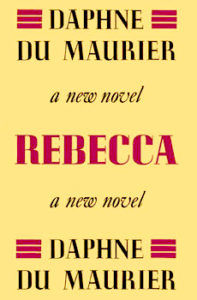 Rebecca is one of the exceptions to this trend—it seems to be entertainment first. It delights in its own extravagant writing and startling twists, and the story is melodramatic and absorbing. It’s not a happy story—it’s more like a nightmare, honestly—but it exists somewhere between a classy horror movie and a turbulent romance. It’s not great art—but it’s not simple, either. It plays with its plot for dramatic effect and was more engrossing than I could have predicted. Rebecca belongs on the list because of the simplest reason of all: it’s exciting and suspenseful, and it made its mark on literature and popular culture of the time.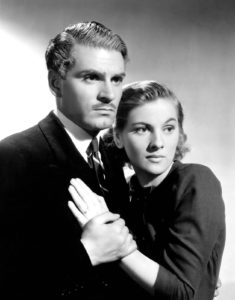
 Good morning, class.
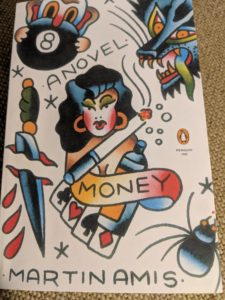 But the least I can do is tell you who these unlikable characters are, and a bit about what they do that’s so unlikable. The narrator is a man named John Self, a conceited, sadistic, out-of-control addict attempting to adapt his story into a movie. He is surrounded by celebrities that are as self-absorbed as he is, as money-addicted and as morally bankrupt too. He spends his days in constant cycles of prostitutes, alcohol, smoking, and mindless purchases, and all the while he experiences a ceaseless and vulgar inner monologue that is as carefully crafted as it is offensive.
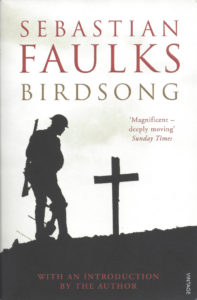 Hello again, class.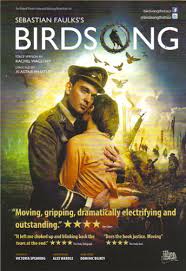

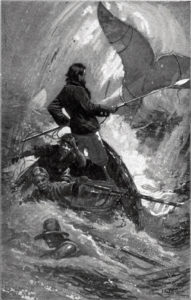 Call me Prof. Jeffrey.
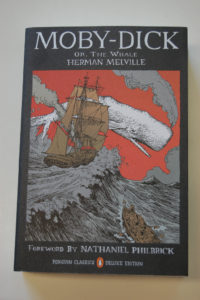 When I say I’ve learned plenty about whales, I mean it—the reason this novel is so long is because half of it is a textbook. The narrator, who calls himself Ishmael (and a questionable authority if there ever was one), spends most of his time making sure we understand exactly what our characters are facing . . . by describing any and all potentially necessary information about whales. He describes the body, behavior, history, and cultural impact of whales, along with details about whaling, oil, ocean life, the routines of the crew, and most importantly, the full description of Moby-Dick himself. As an example, one chapter is called “The Whiteness of the Whale,” which takes several pages to describe Moby-Dick’s rare white skin.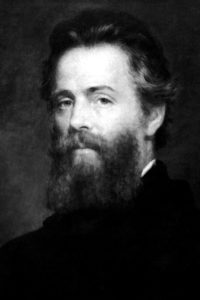
Recent Comments