Welcome back, class.
From the start, I was comparing Ken Kesey’s One Flew Over the Cuckoo’s Nest with Sylvia Plath’s The Bell Jar. Both focus on characters with mental illness, as well as the concept of mental illness, while tackling loosely related problems like American culture, sexism, and the conflict between the individual and society. But that’s it. Beyond that, the books are as different as The Diary of Anne Frank and the Harry Potter Series.
And what makes them so different? Kesey’s novel is only about mental illness on the surface. There are clearly characters who are mentally ill, including the narrator, but that illness is simply the backdrop for a larger story—a story about oppression, anarchy, identity, and society. One Flew Over the Cuckoo’s Nest isn’t about curing those who are ill, but about freeing those who are enslaved. There are issues with that approach, but the story is good enough to rise above those issues.
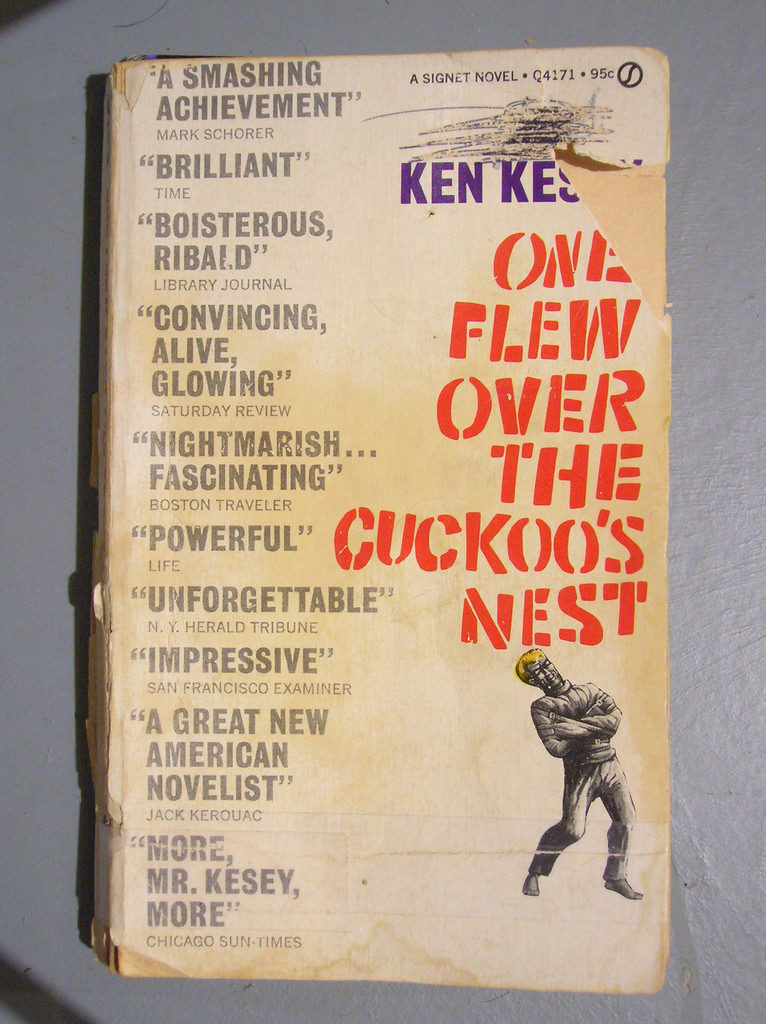 First of all, the writing is SOLID. Everything about Kesey’s style is original, enjoyable, clever . . . it’s audible and graphic and is meant to immerse you into the vivid and uncomfortable world of a mental ward. On this ward, tragedy and terror happen without warning, and the smallest of details cause the biggest impact—the writing reflects that, and the few peaceful scenes that occur take such sharp turns into chaos that, after a while, the reader realizes there aren’t any peaceful scenes at all . . . only anarchy and the build-up to it. The genius of One Flew Over the Cuckoo’s Nest is in Kesey’s portrayal of the story’s events, and if there’s only one reason it made the list, look no further. Knowing full well I can’t do his amazing style justice, I encourage you to read it yourself and see what I mean.
Then, there’s the story itself—Randle P. McMurphy is a criminal who pleads insanity in the courtroom, and winds up on the ward with the actual mentally ill. Within hours, he sees that the situation on the ward is a step above prison, but the countless restrictions make life about as flexible as concrete, and he decides that he won’t stand for it. The leader of the ward is Nurse Ratched, a domineering woman whose sole pleasure seems to be rigidity and order—every move she makes is to perfect the lives of her patients whether they want it or not. McMurphy and Ratched become fast enemies, and the rest of the patients get caught in the crossfire.
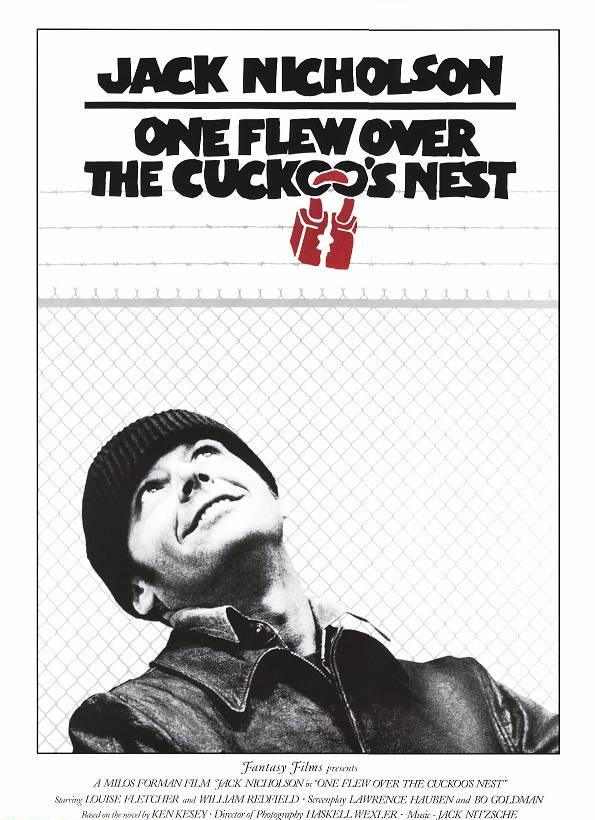 It’s easy to see McMurphy as the hero and Ratched as the villain, and while Ratched has next to no redeemable qualities, McMurphy is a far cry from a great leader or liberator in any scenario. His criminality alone isn’t a series of innocent slips—it’s implied he’s done some terrible things. He has moments of kindness, most of which are veiled maneuvers to try to get what he wants—more freedom on the ward for something trivial, or at least the ability to upset the power dynamic and throw Ratched off her game. But there are moments of rebellion on behalf of the other patients, and those moments make McMurphy more complicated and more interesting. Kesey refuses to let McMurphy fall into labels that trap him like “hero” or “anarchist” or “revolutionary.”
One of the flaws of One Flew Over the Cuckoo’s Nest is its Hemingway-esque focus on masculinity—this is a novel about men and for men, with a sexualized woman as the villain. In this world, men are celebrated for things that are crass and inexcusable, disguised as rebellion against the established order. But, to be fair, in a world where the established order is a specific kind of oppressive—sexless, muted, inflexible—performing revolutionary acts that flaunt morality or social code may be inherently good. What bothers me is that these acts tend to be for men at the expense of women, and Kesey created a story that allows for that, knowing that to soften the backward-ness of these dynamic characters would be to weaken the story. The good and powerful themes of this novel come at that cost, so be willing to pay it when you pick it up.
Despite that backward-ness, One Flew Over the Cuckoo’s Nest has a violent wit and a very, VERY well-told story. It may be played for crazy at the expense of the mentally ill, but it’s a novel that presents the distinction between society and its marginalized individuals with force and flare. I encourage others to read it with eyes open for the good, the bad, and the ugly.
That’s FORTY BOOKS DONE. Only ten more to go! There are some books in this final round that I’ve already read, and some that I know absolutely nothing about, so we’re not going into unfamiliar territory but we are reaching the end of our journey. I feel more enlightened already.
Next up is The Adventures of Huckleberry Finn, similarly controversial for very different reasons. I hope I can do it justice, because I’ve read this novel several times, and I’ve loved it and hated it, and even felt a high-school-indifference to it. We’ll see how it goes.
Until then,
Prof. Jeffrey
 The society of Brave New World runs on a set of rules that everyone happily follows; for instance, solitary actions are as prohibited as possible, and in sexual terms, everyone belongs to everyone else. Extreme emotions have been all but eradicated with removal of the family unit, genetic modification, psychological conditioning, and a drug called soma. Without extreme emotions—passion, rage, fear, jealousy, misery—all that’s left is a mellow contentment. Between universal happiness and ideals like truth, beauty, or knowledge, the populace has overwhelmingly chosen happiness.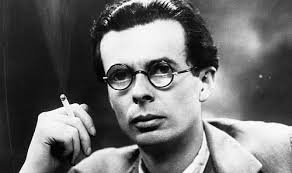
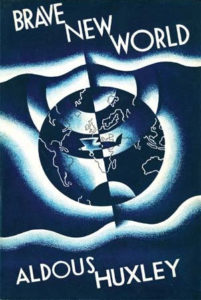 1984 is about a regime holding power and using ideology, propaganda, and torture to subdue threats . . . humanity’s enemy is more powerful than ever, but it’s the same enemy: an upper class with all the power. Brave New World might even be scarier, because there is no enemy. Humanity simply gave up, surrendered to happiness. All the things we like to think make humanity good—art, morality, intelligence, curiosity, passion . . . all replaced by peace. A numbing, terrifying global peace.
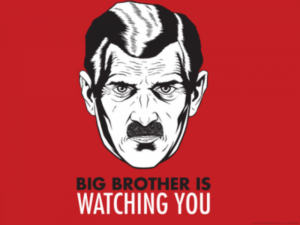 For those of you that don’t know, 1984 is a novel from the late 1940s, portraying a dystopian future set in or around the year 1984. We follow Winston Smith, a regular enough guy, who spends his days updating documents in service to the Party (the ruling political body); but in his mind, he gives us the scoop on the terrible world he lives in. The Party enforces total order and removes any and all traces of rebellion or revolution; telescreens and microphones are everywhere, destroying privacy; egregious lies are perpetuated, the most notable of which is a fictional, decades-long war used to distract the masses and enforce rations; and Big Brother, the terrifying face that looms over everything, holds all of the political power.
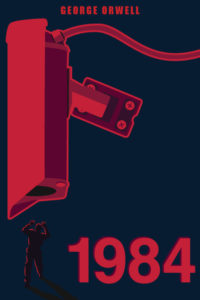 There are many ideas guiding the novel, but Winston’s individuality is the most important one. The fact that he has his own memories, his own thoughts, his own feelings… it means that he still has his humanity. The Party is, ideologically, a group mind; they believe that reality exists only in the collective mind, so if everyone agrees that something is true, then it is true. If there were only two people on the planet and they both truly believed that they had the ability to fly, then that was true, regardless of whether they actually lifted off the ground. External reality is invalid.
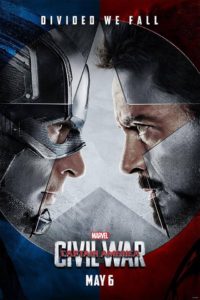 Well, I seem to have caught the attention of comic book fans in the back of the class—thank you for joining us. Yes, I am comparing George Orwell’s 1984 to the blockbuster hit of the year, Captain America: Civil War, at least in part because it continues Orwell’s political and ethical dialogue. It’s not a perfectly clean connection, but a very similar issue is played out between our opposing heroes, Steve Rogers’ Captain America and Tony Stark’s Iron Man.
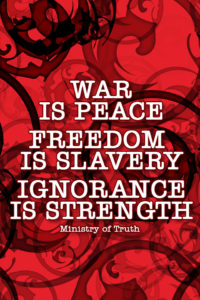 As terrible as the world of 1984 sounds, it is a peaceful world. Crime is dealt with before it happens, the ruling body stays in power unquestionably, and noble ideas about freedom and justice won’t dare topple the order that has been established. It is a deadly, terrifying peace, at the cost of freedom. Winston Smith, our aging, frail hero, is maintaining his individuality—his freedom to be himself—endangering his life at every passing moment. The novel asks an unanswerable question of politics and ethics—what’s more important, freedom or peace?
Recent Comments